

Healthcare. AI Systems, Automation.
A hospital network clears a three-week EEG backlog.
- 70%
- less drafting time
- 0
- weeks of backlog, from three
- 70%
- less drafting time
- 0
- weeks of backlog, from three
- Client
- Hospital network (under NDA), Pakistan
- Industry
- Healthcare
- What we built
- AI Systems, Automation
- Timeline
- 10 weeks, 2025
Before
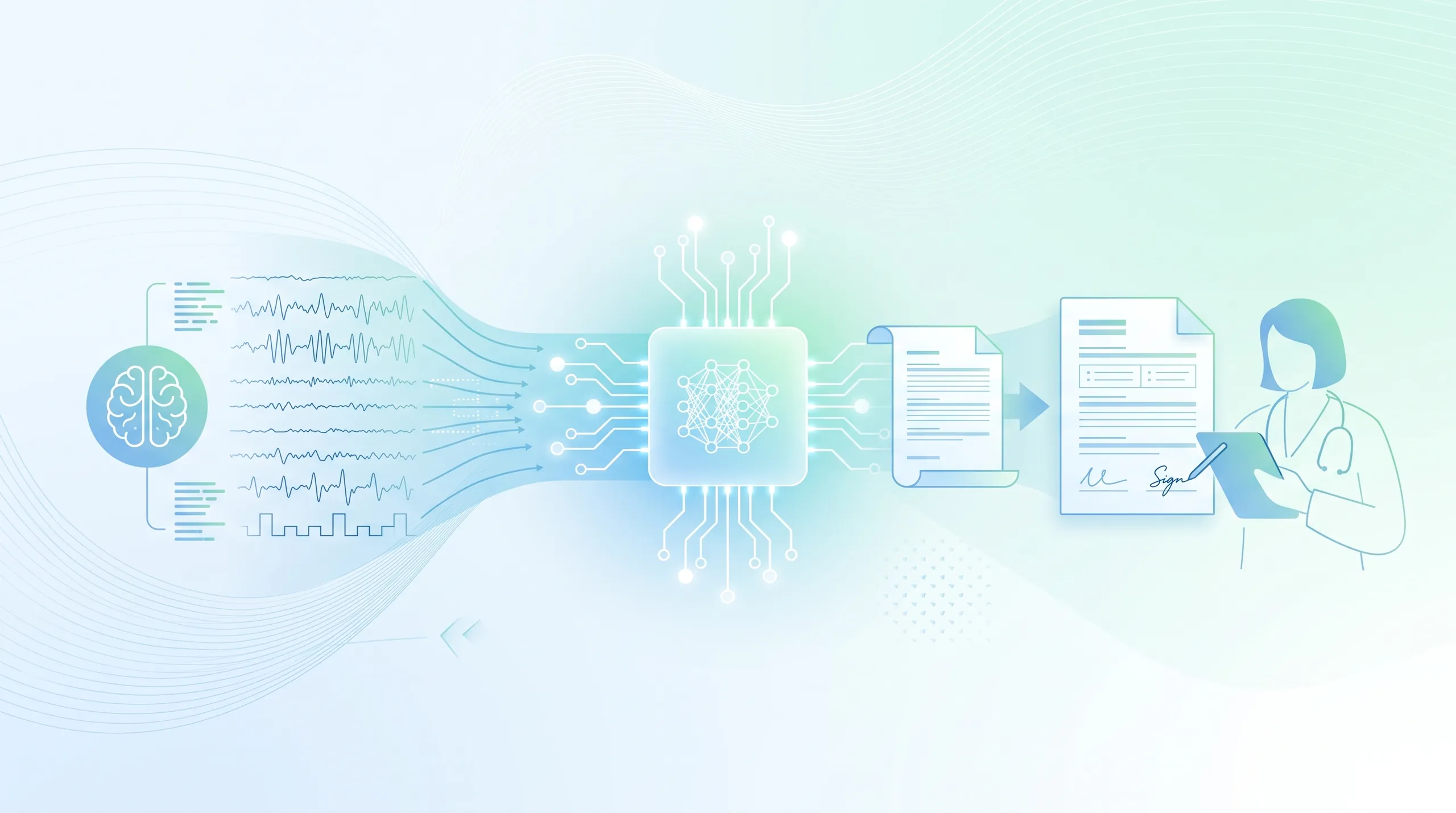
An AI reporting pipeline that drafts EEG reports for neurologists to review and sign, cutting drafting time by 70%.
Neurologists were spending 45 to 90 minutes writing up every EEG. The queue grew faster than it could be cleared, and a three-week reporting backlog had built up behind it. Hiring more specialists was not an option at the speed the backlog was growing.
What we built
01
The decision that shaped it
We did not try to automate the diagnosis. The clinical judgement had to stay with the specialist, both for safety and for the hospital to accept the system at all. So we moved the automation one step earlier, to the blank page. If a neurologist opens a draft instead of an empty document, most of the time cost disappears without touching the decision itself.
02
What we engineered
A reporting pipeline that produces a draft report per study, structured the way the department already writes them. Clinicians review, correct and sign off, and the signed report is what leaves the system. Every draft is attributable and every edit is retained.
03
Automated draft generation per study
Clinician review and sign-off workflow. Department-specific report structure.
04
What leaves the system
Reporting moved from a bottleneck to a routine step. The existing backlog was cleared without adding specialist headcount, and the department kept full clinical control of what it signs.
01
The decision that shaped it
We did not try to automate the diagnosis. The clinical judgement had to stay with the specialist, both for safety and for the hospital to accept the system at all. So we moved the automation one step earlier, to the blank page. If a neurologist opens a draft instead of an empty document, most of the time cost disappears without touching the decision itself.
02
What we engineered
A reporting pipeline that produces a draft report per study, structured the way the department already writes them. Clinicians review, correct and sign off, and the signed report is what leaves the system. Every draft is attributable and every edit is retained.
03
Automated draft generation per study
Clinician review and sign-off workflow. Department-specific report structure.
04
What leaves the system
Reporting moved from a bottleneck to a routine step. The existing backlog was cleared without adding specialist headcount, and the department kept full clinical control of what it signs.
- Automated draft generation per study
- Clinician review and sign-off workflow
- Department-specific report structure
- Backlog clearance across the existing queue
What changed
EEG report drafting time cut by 70%, and a three-week backlog cleared.
Reporting moved from a bottleneck to a routine step. The existing backlog was cleared without adding specialist headcount, and the department kept full clinical control of what it signs.

Have a process shaped like this one?
Describe it in plain language. We will respond with a proposed architecture, a first milestone and the key risks.
We respond within one business day. If we are not the right fit, we will tell you.